


ATM is the abbreviation for Automated Teller Machine. Although it can be translated into Turkish as “otomatik vezne makinesi,” we commonly refer to these financial tools as “Bankamatik.”
While they were initially used only for depositing and withdrawing money from your account, today they have evolved into a technology where you can perform almost all transactions that you can do at a bank branch. ATMs recognize your account through a unique identification number (PIN) and allow you access.
Every technology has its time for use. Many technologies in the world were not utilized because they were invented ahead of their time; their widespread use may have only occurred twenty, thirty, or even fifty years later. Unless the inventor was very young—which is nearly impossible—the person who made the invention rarely got to enjoy the prosperity it brought.
The active use of ATMs began approximately 37 years after their invention, and it has been over 50 years since they started being used in Türkiye. They were first invented in 1930 by Luther George Simjian, an Ottoman Armenian. However, since they could not find a practical application in America at that time, the project was shelved.
Thirty-seven years later, in 1967, the electronic ATM was produced by John Adrian Shepherd-Barron for Barclays Bank in the UK. In Türkiye, they were first introduced into service by İşbank in 1982.
ATMs consist of six main devices: a card reader, a keyboard, a speaker, a screen, a printer, and a cash deposit/withdrawal slot. Their cabinets contain an Uninterruptible Power Supply (UPS) to ensure transactions are not interrupted or are at least saved in the event of a power failure, as well as air conditioning systems to prevent the system from being affected by extreme heat or cold.
The use of ATMs has increased exponentially over time, and this increase has made ATM malfunctions much more noticeable. The most common cause of failure for ATMs is the neutral-to-ground voltage being higher than nominal levels.
In almost no ATM can the desired 1V level for neutral-to-ground be maintained, which leads to constant malfunctions. While a partial solution is offered by separating the operational and protective grounding with an isolation transformer, a general solution cannot be provided since it is often unknown whether the problem stems solely from grounding or the neutral line.
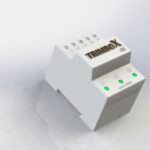
As Trimbox, with our GNDSeries neutral-to-ground regulators, we offer a definitive solution regardless of the neutral-to-ground voltage level or whether the issue originates from the neutral or the grounding line. Furthermore, with its integrated surge suppression feature, GNDSeries also protects connected devices such as the UPS and air conditioning systems.
Simple precautions sometimes save lives. The best investment we can make for our family, our business, and our environment is protective measures. With Trimbox and GNDSeries, you can be protected from electricity-related damages and electrical contact fires caused by them.
Whatsapp : +90 555 014 24 23