

Electric washing machines were invented at the beginning of the 20th century. Alva John Fisher invented the first electric-powered washing machine in 1901 and named it “Thor.” Mass production began in 1908, and by 1924, models with drying features were introduced to the market.
From its first hexagonal design in the mid-18th century to the present day, the washing machine—like many other technologies—has not actually made a revolutionary leap, other than transitioning to electric power.
Despite the lack of significant structural evolution, it is known that hundreds of patents have been granted for washing machines. This situation almost seems to prove that the word “patent” has become an emptied concept in this context…
So, what kind of malfunctions occur in washing machines? Are there precautions that can be taken to prevent these issues?
Let’s examine washing machine malfunctions under several headings:
- One of the first and most common problems is noisy operation.
The root of this problem usually lies in the machine not being installed on a level floor; even a minor imbalance in the feet can be the cause. This issue can escalate and damage the shock absorbers, cause the heating element to dislodge and rub against the drum, or loosen the drum bearing housing. Additionally, an object trapped between the tub and the drum can cause noise.
- Excessive foam formation in the detergent drawer.
This is likely due to choosing a detergent that is not suitable for automatic washing machines. Washing machine detergents are designed to function without excessive suds. If it foams too much, it becomes impossible for the clothes to strike each other or the drum walls effectively, preventing a thorough clean.
- The machine is not taking in detergent.
This problem occurs when the water pressure is too low. It is generally seen in rural areas, locations far from the water tank, or in regions where heavy usage by early-line users results in a lack of pressure for end-line users.
- The machine is not taking in water.
The water supply or valve might be closed, the hose might be kinked or clogged, or on some machines, the system will not draw water as a safety precaution if the door is not fully closed.
- The machine is not working at all.
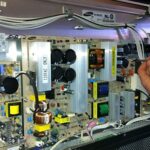
It is highly probable that the machine’s electronic board has burned out due to an electrical fluctuation or high voltage. If the machine does not start despite checking the socket and fuse and confirming power is present, an electronic card failure has likely occurred.
- When the machine starts taking water, I get an electric shock from the faucet.
There is a grounding issue in your system. Your grounding connection may be loose or broken, or there may be no grounding in your system at all.
As Trimbox, with our new generation surge arresters and surge suppressors, we provide a solution for malfunctions caused by electrical fluctuations and high voltage—not just for your washing machine, but for your entire home with a single product. Additionally, with our GNDSeries neutral-ground regulators, we eliminate the problem of being shocked at the faucet.
Simple precautions sometimes save lives. The best investment we can make for our family, our business, and our environment is protective measures. With Trimbox and GNDSeries, you can be protected from electricity-related damages and electrical contact fires caused by them.
Whatsapp : +90 555 014 24 23