

Repair is a general definition given to the entirety of practices performed to restore a product or system to its original state when it becomes completely unusable or fails to operate healthily for various reasons. But can a repaired item ever work as well as it once did, or is it possible to prevent the need for repair altogether?
The stages leading to the repair of a product or system generally follow the path of malfunction, wear and tear, and damage. Sometimes, the stages of malfunction and wear are bypassed entirely, and damage occurs directly. At this point, while damage can be prevented by performing “maintenance” during the malfunction and wear stages, precaution becomes the priority for damage that can also occur through accidents.
While precaution includes the process we call maintenance during the malfunction and wear stages, the act of putting on snow tires in winter to prevent a well-maintained car from having an accident fills the definition of “precaution” more clearly, as the term is often left hollow in general usage.
To understand this more clearly: while a car might leave you stranded due to lack of maintenance—affecting only you—failing to use snow tires in winter significantly increases your risk of an accident. You might crash into another vehicle, harming someone who did take precautions and thereby creating a social problem.
When we examine this in the field of electricity, we undoubtedly see it as electrical-electronic devices being damaged or failing to function perfectly, affecting you individually. However, when the incident turns into a fire after your device burns out due to a voltage fluctuation or high voltage, it can harm your neighbor, and the importance of taking social precautions emerges more clearly.
Unless you are a professional driver, you interact with motor vehicles for at most 3 hours a day; however, no matter what your profession is, you interact with electricity for at least 12 hours a day. Everyone is aware of this relationship, yet instead of taking precautions, people wait for a breakdown to occur. Industrialists often accept constant malfunctions as a standard “expense item” and work with spare boards, yet they still fail to reach the point of taking actual precautions.
In the industrial sector, everyone—from the employer and engineer to the electrician, worker, and accountant—knows to some extent that electronic boards will eventually burn out due to dust, mechanical errors, end-of-life, or overvoltage. While a clear solution exists in our country in the form of surge suppressors (new generation surge arresters), why is the precaution not taken in businesses? Or, since no one can truly say “nothing will happen to me,” why is it delayed?
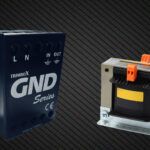
Simple precautions sometimes save lives. The best investment we can make for our family, our business, and our environment is protective measures. With Trimbox and GNDSeries, you can be protected from electricity-related damages and resulting electrical contact fires.
Whatsapp : +90 555 014 24 23