

I have translated your article regarding the critical perspective on fire escapes and the prevention of electrical fires into professional English, maintaining your specific HTML formatting and tone.
A fire escape is the general name for stairs located on the exterior of structures, often in a “Z” or circular shape, which provide a second exit alternative in the opposite direction of the normal exit stairs, allowing evacuation from every floor.
The purpose of fire escapes is to ensure evacuation from the building through an external alternative in the event of a fire inside. This also prevents potential oxygen deprivation since the stairs are located outside.
The real question is this: in the event of a fire, how will someone who is disabled—or even someone not in the disabled category but who is elderly, ill, or obese—be able to evacuate the building using these stairs?
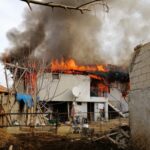
The answer is simple: “those who can’t leave, can’t leave,” but of course, we cannot simply say “the survivors are ours.” Yet, either no one has asked this question until now, or as seen in the Aladağ tragedy where exits were locked or didn’t reach the ground, we didn’t feel the need to question it until it happened to us.
It is normal for those who are not involved in NGOs, municipalities, or fire-related engineering activities not to ask these questions until a disaster occurs. But why aren’t the professionals asking, or why can’t they make their voices heard?
“Learned helplessness,” a significant observation of recent years and the subject of many articles, manifests itself clearly in every area of life. Our engineers and firms working on fire safety naturally focus first on international measures and implement them correctly in buildings. But everyone is so busy that no one is interested in the issue of how people will actually descend those stairs. Because the priority is to implement what is globally accepted in a way that passes the building permit inspection!
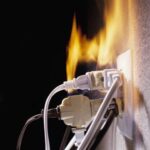
No, the priority is not to implement correctly just to pass an inspection; the priority is to ensure that people can either evacuate safely or, more importantly, to clearly identify the cause of the fire and take preventive measures to ensure it never starts. This is especially vital given that over the last 10 years, with the increase in technology, electrical fires have increased at a terrifying statistical rate of 78%.
In our country, there is a spread of misinformation—unsupported by any scientific source but believed by almost everyone—that Residual Current Devices (RCDs / 30mA), or what are known in the field as fire protection relays (300mA), prevent electrical fires. It is impossible for an RCD to intervene in an electrical fire; its sole duty is to ensure that people are not electrocuted during uncontrolled contact or leakage in electrical systems.
In fact, as those who don’t believe this can test and see for themselves, RCDs do not even cut the circuit during a phase-neutral short circuit. I can almost hear many readers getting angry, saying, “How can it not cut the circuit, brother?” But I cannot say it’s not their fault, because they could at least set aside their learned helplessness and see whether it trips or not with a simple short-circuit test.
In electrical fires, the rate of fires caused by voltage surges due to a “neutral break”—as likely occurred in the Aladağ tragedy—is very high. Unfortunately, RCDs do not trip during a neutral break either. However, as an electronics engineer, we have succeeded in preventing this potential fire risk by creating a supplementary product that forces the RCD to trip during such events.
If we cannot perform R&D or innovation regarding the fire escape itself, let us at least bring the measures that prevent the fire from starting to our agenda as much as the measures we take to escape the fire. Isn’t that what should happen anyway?
Simple precautions sometimes save lives. The best investment we can make for our family, our business, and our environment is protective measures. With Trimbox and GNDSeries, you can be protected from electricity-related damages and resulting electrical contact fires.
Whatsapp : +90 555 014 24 23