

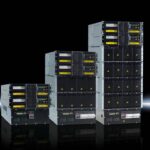
A regulator, in the literal sense, is an adjuster—commonly known as a booster. These are voltage stabilizers consisting of a single-winding component called a variac, which can be thought of as a kind of smart transformer. They regulate low or high input voltage to a stable output based on their own winding ratio.
They first came into our lives during the era when televisions became widespread. In those days, electrical distribution lines and transformers were sparse, and distances to the nearest transformer were measured in kilometers. Regulators were initially used to boost the voltage to reach a specific required value.
Over time, as the population grew and electricity integrated into every aspect of life, distribution transformers were configured to output 240V-250V instead of 220V so that the end-user at the far end of the line could receive at least 190V-200V. Consequently, regulators—which were used as boosters—began to be used as step-down stabilizers in areas close to the transformers. There was even a period where TVs, which are sold today with surge protector strips, were sold bundled with a regulator.
Today, while the usage area of regulators is gradually decreasing, they are still essential products in rural areas where distribution distances are vast and voltage levels cannot be maintained. However, using a regulator to “protect” a combi boiler in the heart of Istanbul is nothing more than an electrician misleading their customer.
Since regulators are often used in problematic electrical environments, their risk of failure can be high. Let’s examine regulator-related malfunctions and potential precautions under a few headings:
- The authorized service recommended a regulator to prevent my machine’s electronic board from burning. But my boards are still burning.
Recommending a regulator for a machine’s electronic board is, except in exceptional cases, a result of technical incompetence. If we are talking about a machine, there is a factory involved. If there is a factory, it is usually located in an organized industrial zone or has its own dedicated transformer. Furthermore, phase protection relays installed on machines disconnect the power and turn the system off when voltage falls outside a specific low or high range. In industry, the burning of electronic boards is generally independent of the main voltage level and unrelated to regulators; it is caused by what we call “peaks”—internal events like machines switching on and off, power flickers, and inrush currents (demarage). A surge suppressor will solve this problem. However, there are exceptional cases: situations where the factory is not in an organized zone and does not have its own transformer. In these cases, a regulator is necessary to obtain nominal voltage levels for the machines. But even then, the regulator’s own control cards can burn out, so you must still protect both your regulator and your machine boards with a surge suppressor.
- I use a regulator for my combi boiler, and both the regulator and the boiler burned out.
Recommending a regulator for a combi boiler control board is entirely due to technical incompetence, even in exceptional circumstances. As of 2020, natural gas has not yet reached the remote rural areas where a regulator might actually be necessary. Therefore, there is no real connection between protecting a boiler board and using a regulator. By using a surge suppressor, you can protect both your boiler and all your other white goods with a single product.
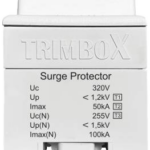
Since the current usage areas for regulators are very limited, the malfunctions experienced are also limited and naturally related to voltage levels. As Trimbox, with our surge suppressors, you can protect your machines, boilers, and all your electrical and electronic devices against surges, including lightning strikes and transformer explosions.
Simple precautions sometimes save lives. The best investment we can make for our family, our business, and our environment is protective measures. With Trimbox and GNDSeries, you can be protected from electricity-related damages and electrical contact fires caused by them.
For detailed information and to have us call you;
Whatsapp : +90 555 014 24 23